Take a Virtual Tour
 Book a Demo


TL;DR: When a breach is contained and the incident is closed, most security teams can show that alerts stopped. They cannot prove the threat is gone. Regulators, insurers, and boards are increasingly asking for the difference. Evidence of absence means demonstrating that malicious files and their variants are not present anywhere in the environment, not just on the hosts that triggered the original alert. Meeting that standard requires a complete, searchable record of every file from every endpoint, combined with continuous reanalysis as new threat intelligence arrives. Without both, you have absence of evidence. That is a much weaker statement in a board briefing or a regulatory review.
Table of Contents
- The Gap Between Containment and Confidence
- What Evidence of Absence Actually Means in Threat Intelligence
- The Hindsight Problem in Incident Response
- What IR Teams Need to Tell Leadership
- Turning an Alert Into Proof
- Why Ransomware Containment Is Different
- Closing the Loop With Evidence
- Frequently Asked Questions
The hardest question in incident response is not what happened. It is whether the threat is truly gone.
Anyone who has briefed executives after a breach knows the moment. The technical work is complete. Systems have been remediated. The incident is considered closed. Then someone asks the question that has no easy answer.
How do you know?
Not how do you believe based on available evidence? How do you know that the malware has been fully eradicated, that no variant remains somewhere in the environment, and that containment actually held?
For most security teams, the honest answer is uncomfortable. They cannot prove it. They can only show that alerts stopped. Those two things are not the same. Regulators, insurers, and boards are increasingly aware of that distinction.
The Gap Between Containment and Confidence
Incident response frameworks are well established. Detection leads to analysis. Analysis leads to containment. Containment leads to eradication and recovery. Once the environment stabilizes, the incident is closed and the organization moves forward. But the definition of eradication is often surprisingly weak.
In many organizations, eradication means affected systems were reimaged, known malicious files were removed, and indicators of compromise were blocked across security controls. Analysts confirm those steps were completed and the case is resolved.
What rarely happens is a systematic answer to the harder question. Did we actually find every instance?
Malware rarely appears in isolation. A single executable missed during cleanup can reestablish persistence. A modified variant that never matched the original indicators can remain dormant. Lateral movement that occurred before containment may leave artifacts on hosts that were never part of the initial investigation.
When alerts stop, teams assume eradication succeeded. Alerts stopping is not evidence of eradication. It only shows that no new alerts were triggered. Boards, regulators, and insurers increasingly expect more than that. They want evidence of absence.
What Evidence of Absence Actually Means in Threat Intelligence
The phrase comes from scientific and forensic practice. Evidence of absence means demonstrating that something is not present rather than simply failing to find it.
In incident response terms, it means being able to show that malicious files and their variants are not present anywhere in the environment. Not just on the hosts you investigated or where the initial alert appeared. Everywhere.
Meeting that standard requires two capabilities that most organizations do not have during an incident review.
First, you need a complete searchable record of every file that has touched every endpoint. Not logs showing events but the actual executables and artifacts themselves. Logs may show that something happened but they cannot reconstruct malware that no longer exists on disk.
Second, you need the ability to analyze that full file history using everything you know today. Indicators published after the incident, newly discovered malware variants, and updated threat intelligence must be applied across the entire dataset.
Without those two capabilities, evidence of absence is not achievable. What you have instead is absence of evidence. That is a much weaker statement when answering questions from a board or regulator.
The Hindsight Problem in Incident Response
A familiar scenario appears again and again in incident response engagements. A breach is detected and contained. The investigation concludes. The incident is closed. Weeks later a new threat report appears describing the same campaign and publishing additional indicators.
The security team runs a retro hunt and finds activity that was previously missed. Suddenly the closed incident is reopened. The eradication conclusion becomes uncertain. Leadership briefings must be revised.
This is not a failure of the incident response team. It is a limitation of point-in-time analysis. The investigation closed using the intelligence available at that moment. But threat intelligence continued to evolve.
Continuous reanalysis changes this dynamic. When every file from every endpoint is preserved and continuously analyzed, the arrival of new intelligence does not trigger a manual retro hunt. The new indicators are automatically applied across the entire historical corpus. If something matches, it surfaces immediately, whether the incident is still open or was closed months ago.
This is what Stairwell calls hindsight in real time.
What IR Teams Need to Tell Leadership
Executive leadership does not need to understand the technical architecture of malware analysis. They need clear answers to the questions they are asked by others.
From the board: was the breach fully contained and how do you know?
From cyber insurers: can you demonstrate eradication across all affected systems?
From regulators: what evidence shows that the malicious files are no longer present in the environment?
The answers must be defensible. Saying that affected systems were reimaged describes a remediation step. It explains what actions were taken but does not prove that no related malware remains elsewhere.
A stronger answer looks different. The organization analyzed its complete historical file record against all known indicators and variants associated with the campaign and confirmed that no additional instances exist. That statement reflects evidence rather than assumption.
Turning an Alert Into Proof
This is the model Stairwell was built to support. The Private Vault preserves every executable observed across the environment. Instead of relying solely on logs or detection events, the organization maintains a persistent malware corpus that can be analyzed continuously as intelligence evolves.
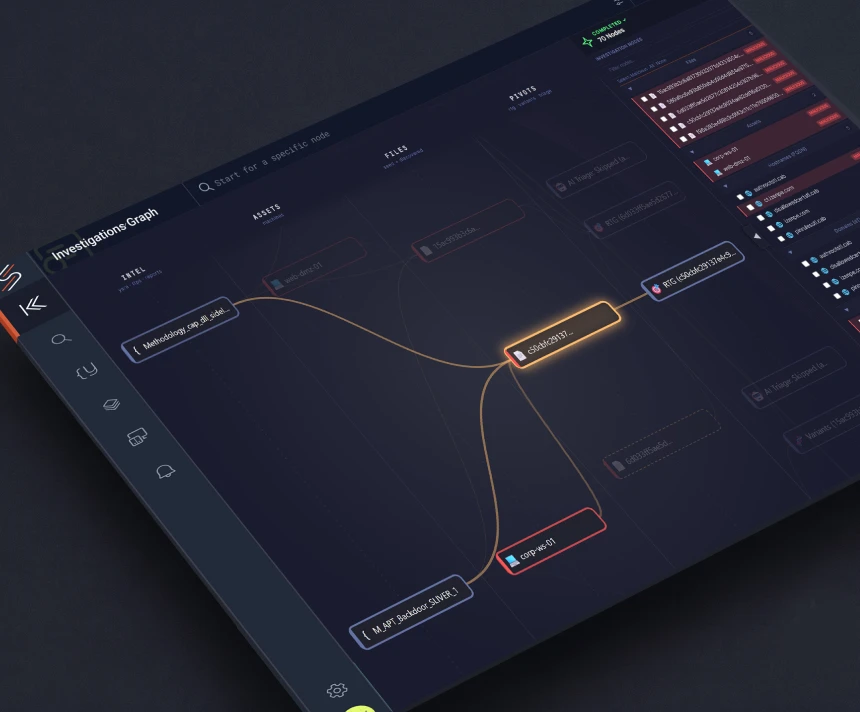
When an incident occurs, Stairwell’s Run to Ground connects the initial alert to its broader campaign context. Related files, endpoints, and timelines appear together in one investigation view, making it possible to see the full scope of activity rather than a single detection event.
Stairwell’s Variant Discovery expands that visibility further. Malware rarely appears in identical form. Repacked executables, re-signed binaries, and modified droppers often evade hash-based detection. Variant Discovery identifies related files based on structural similarity, revealing malware families that traditional detection would miss.
The result is not just a remediation checklist. It is a documented record demonstrating that the malicious files and their variants are no longer present anywhere in the environment. That is what proving it is gone actually looks like.
Why Ransomware Containment Is Different
Few incidents put containment verification under more scrutiny than ransomware.
Modern ransomware operations rarely deploy a single payload. Attackers establish persistence in multiple locations, move laterally across systems, stage tools throughout the network, and only later deploy the encryptor that triggers the visible incident.
The loader, credential harvesting tools, persistence mechanisms, and lateral movement utilities may remain in the environment even after the encryptor is removed.
Proving containment therefore requires confirming that every artifact associated with the campaign is gone from every endpoint. This includes the loader, the dropper, the command and control beacon, and any variants of those tools. It is a high standard but it is the appropriate one when regulatory reporting and cyber insurance claims are involved.
Continuous analysis across a persistent file corpus is the only practical way to meet that standard.
Closing the Loop With Evidence
Incident response should end with proof, not assumption. Security teams have built strong processes for detection and remediation. Verification, the step that proves eradication with evidence, has lagged behind because most organizations lacked the infrastructure to support it.
A persistent file corpus combined with continuous malware intelligence changes what is possible. Every file the environment has ever seen can be reanalyzed automatically as threat intelligence evolves. Incidents are not just investigated in the moment. They are continuously revalidated over time.
Alerts stopping is not evidence. Evidence is evidence. Organizations that can produce it will brief boards differently, respond to regulators differently, and close incidents with far greater confidence. Not because their incidents were easier. Because they can prove the malware is gone.
See how Stairwell helps IR teams prove containment →
Frequently Asked Questions
What is evidence of absence in incident response?
Evidence of absence means demonstrating that a threat is not present in your environment, not simply that you stopped looking for it. In incident response, it means producing a documented record showing that malicious files and their variants do not exist anywhere across your endpoints. It is a stronger standard than closing a ticket because alerts stopped. Boards, regulators, and insurers are increasingly asking for this level of verification.
What is the difference between absence of evidence and evidence of absence?
Absence of evidence means you searched and found nothing, but your search may have been incomplete. Evidence of absence means you searched comprehensively and can show that the threat is not there. In incident response, most organizations produce the former because they lack a complete file corpus to search against. The latter requires every file from every endpoint to be preserved and continuously reanalyzed.
Why do incidents get reopened after they are closed?
Incidents are typically investigated using the intelligence available at the time. Threat intelligence continues to evolve after an investigation closes. New indicators, updated campaign attribution, and newly discovered malware variants may not surface until weeks or months later. When those new indicators match activity from a previously closed incident, teams have to reopen it, revise their conclusions, and brief leadership again. Continuous reanalysis against a persistent file corpus eliminates this problem by automatically applying new intelligence to historical data.
What do boards and regulators actually want to see after a breach?
They want defensible answers to specific questions: Was the breach fully contained? Can you demonstrate eradication across all affected systems? What evidence shows the malicious files are no longer present? Describing the remediation steps you took, reimaging systems, blocking IOCs, removing known files, answers what you did. It does not answer whether the threat is actually gone. Producing a documented analysis of your complete file history against all known indicators associated with the campaign is what a defensible answer looks like.
Why is ransomware containment harder to verify than other incidents?
Ransomware attacks typically involve multiple stages and multiple tools. By the time the encryptor deploys and triggers the visible incident, the attackers may have already placed loaders, credential harvesters, persistence mechanisms, and lateral movement utilities across many systems. Removing the encryptor does not address those earlier artifacts. Proving containment after ransomware means confirming that every artifact associated with the full campaign is gone from every endpoint. That requires visibility into the complete file history of the environment, not just the systems initially flagged.
How does Stairwell help security teams prove containment?
Stairwell’s Private Vault stores every executable observed across your environment, creating a persistent malware corpus that can be searched and reanalyzed continuously. When an incident occurs, Run to Ground connects the initial alert to its full campaign context, showing related files, affected endpoints, and timelines in one view. Variant Discovery identifies structurally related files that would evade hash-based detection, surfacing the full malware family rather than individual known samples. Together they produce a documented record that malicious files and their variants are not present anywhere in the environment. That record is what transforms a remediation checklist into a defensible briefing for the board.
What happens when new threat intelligence is published after an incident is closed?
In a point-in-time model, new intelligence triggers a manual retro hunt. Analysts must search backward through whatever data is still available, often finding that relevant artifacts were never preserved. In Stairwell’s continuous model, new indicators are automatically applied against the full historical corpus. If a match exists, it surfaces immediately without manual intervention. The closed incident is either validated or reopened with evidence, not with uncertainty.