Detection captures a moment. The file preserves the evidence.
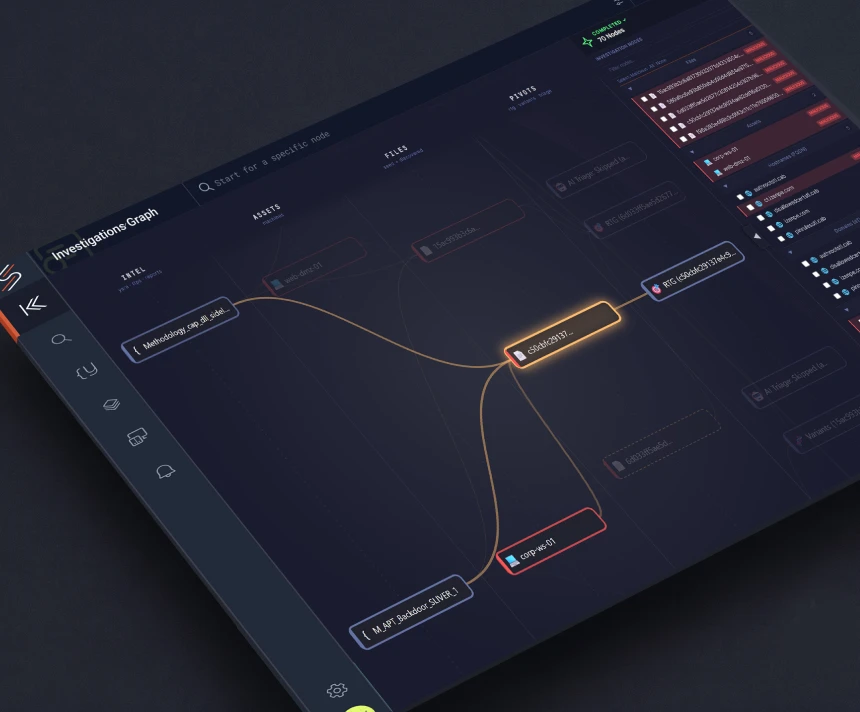
Stairwell preserves every executable from every enrolled endpoint in your own dedicated environment. No arbitrary retention window. No rebuilding the past from partial logs. When new intelligence arrives, the evidence is still there.
Logs can tell you that a process ran.
The executable tells you what was built to run.
Stairwell keeps the artifact investigators need to reach a defensible conclusion.
When an executable changes, Stairwell stores the new version too.
See what changed, when it changed, and where each version appeared.
Threat intelligence rarely arrives on schedule.
Keeping the full history means a file can still be found long after an ordinary log window closes.
Your files, rules, and results remain isolated in your environment and invisible to adversaries.
Build a complete, searchable record of the executables your organization has seen from deployment forward.
Compare your enterprise files with a private malware corpus that adds depth to every investigation without exposing what your organization has observed.
Trusted groups can exchange malware samples, IOCs, YARA rules, and reporting while every member’s private repository stays separate.
Published reports, indicators, YARA rules, and DNS history remain available beside the files they can illuminate.
Because the artifact can be analyzed again. New rules, new intelligence, and new questions can all be applied to the same file long after it first appeared.
Stairwell is designed to preserve the executable history from deployment forward without an arbitrary expiration window.
Stairwell supports executable and script formats across Windows, macOS, and Linux. Collection policies remain under the customer’s control.
Every collected file expands the history. Every new piece of intelligence can reveal something new inside it.