Take a Virtual Tour
 Book a Demo

Abstract
AI SOC architecture is the technical foundation for AI-driven threat discovery, investigation, and response. Its effectiveness depends on more than automation:
- Retained first-party evidence enables independent threat discovery and retrospective analysis as new intelligence emerges.
- Operational context and verifiable investigations help establish threat scope while distinguishing confirmed findings from missing evidence.
- Governed response workflows require authorization and independent verification before you can consider containment successful.
- Agent security and controlled testing help prevent unauthorized actions and measure investigation accuracy against known threats.
A seven-stage pilot can expose these weaknesses before you deploy to production.
Your AI SOC can clear every alert in the queue and still miss an active threat. That’s the problem with building AI SOC architecture around detections alone. If malware evades detection, it may never generate an alert, trigger an investigation, or appear in the metrics leadership uses to measure security performance.
And the blind spot is bigger than one missed file. Stairwell’s 2026 Hidden Malware Report found that 74% of reviewed threat reports omitted at least one related malicious variant that exact-hash blocking would miss. Finding one known threat doesn’t mean you’ve found its variants or established how far the campaign extends. That’s why effective AI SOC architecture needs more than intelligent alert triage.
What is AI SOC architecture?
AI SOC architecture combines data sources, evidence repositories, analytical capabilities, agent workflows, response integrations, and governance controls to support AI-assisted security operations.
An AI assistant might summarize an existing alert. An agentic SOC goes further: it queries approved systems, proactively hunts for threats, develops investigation hypotheses, and recommends actions within defined permissions. A complete workflow follows six connected stages:
Telemetry and artifacts → Evidence and context → Discovery and triage → Investigation → Governed response → Verification
New intelligence also feeds back into retained evidence, allowing teams to revisit earlier conclusions. This architecture complements established security systems. SIEM platforms correlate telemetry, EDR provides endpoint visibility and response capabilities, SOAR orchestrates actions, and case management maintains ownership and approvals.
AI reasons across accessible evidence. Its effectiveness therefore depends on both the available information and the authority to act on it.
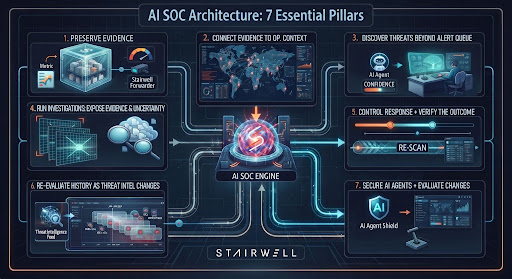
7 essential pillars of AI SOC architecture
1. Preserve first-party evidence with measurable coverage
AI investigations need access to original evidence, not just alerts and logs. If someone deletes a suspicious file before anyone investigates, the SOC may lose the chance to analyze it.
Stairwell’s Forwarder collects executable files, libraries, and scripts, while Private Vault preserves them for future investigation. Each file can be linked to its hash, collection timestamp, and historical host sightings, allowing analysts to revisit evidence as new intelligence emerges.
But collection coverage matters. SOC teams need to track monitored assets, supported file types, collector health, and visibility gaps to understand what evidence they actually collect.
Validation test: Delete a previously collected test file from an endpoint. Can the AI SOC retrieve it and identify where it appeared? Repeat the test on an unenrolled endpoint. The system should flag missing visibility rather than report the endpoint as clean.
2. Connect evidence to operational context
Finding a suspicious file is only the beginning. To assess the threat, the AI SOC needs to know which systems and users are involved and how critical those assets are.
It must link file sightings to asset IDs, user identities, cloud resources, network activity, and case records, using consistent timestamps and source references to help analysts trace activity across systems.
Context also determines urgency. A rare executable on a developer workstation might be legitimate software, but the same file on a privileged server supporting critical infrastructure could warrant immediate investigation.
The architecture should therefore account for asset criticality, exposure, approved software, ownership, and threat intelligence. It must also distinguish between confirmed findings and missing data. For example, if an identity system is unavailable, the AI cannot assume there was no suspicious login activity.
Validation test: Provide outdated asset information and make one telemetry source unavailable. Does the AI SOC identify these gaps, or does it conclude from incomplete evidence?
3. Discover threats beyond the alert queue
An AI SOC that relies solely on SIEM and EDR alerts inherits their detection gaps, because threats that generate no alerts may never be investigated. A stronger architecture supports independent discovery through file analysis, threat intelligence, historical searches, and analyst-led hunts.
Stairwell uses file prevalence, structural similarity, signatures, historical sightings, and threat intelligence to uncover suspicious files. Its Variant Discovery capability helps identify related malware variants, even when their hashes differ.
For example, attackers may recompile known malware to evade exact-hash detection. Structural analysis can reveal related variants and show where they appeared, potentially exposing infections that generated no alerts.
Validation test: Seed a controlled dataset with known malware, modified malicious variants, and legitimate lookalikes. Without an upstream alert, can the AI SOC discover the variants, explain their relationship to the original malware, and identify affected hosts without incorrectly classifying legitimate files as threats?
4. Run investigations that expose evidence and uncertainty
Identifying a malicious file doesn’t tell you how far an attack has spread. File triage assesses individual files, while campaign investigation uses contextual data to link them to affected hosts and historical activity.
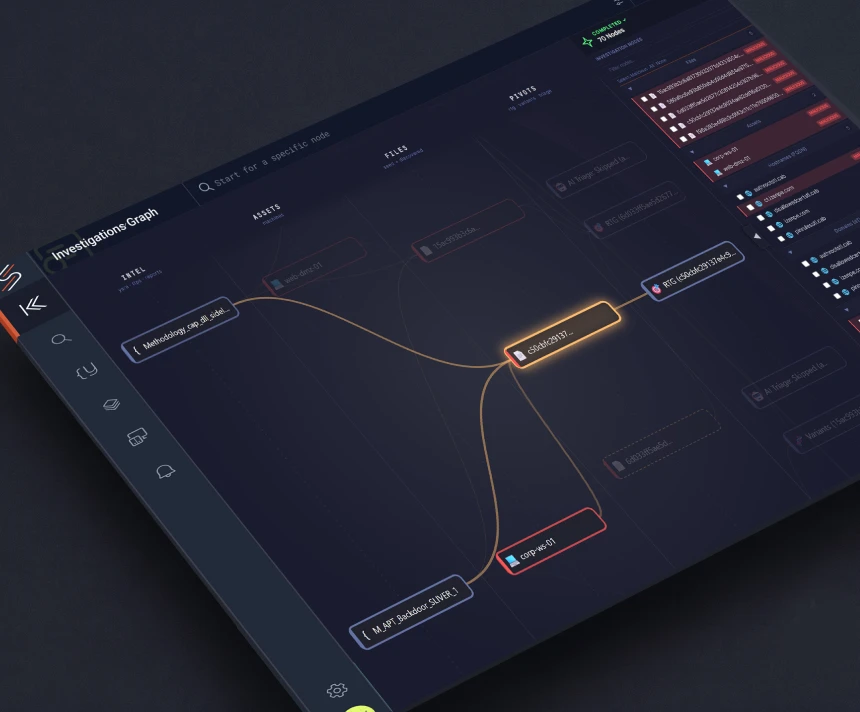
Stairwell’s AI Triage handles file-level analysis. Then, Backstory investigates the broader threat, using retained evidence to trace connections and recommend next steps. Every conclusion should be verifiable. Your AI SOC should also separate confirmed facts from assumptions, cite supporting evidence, and flag missing information. For example, a file found on a host does not prove it executed. Agents also need limits on which tools they use and when they escalate.
Validation test: Remove a critical telemetry source mid-investigation. Does the agent identify which conclusions it can no longer support and escalate unresolved questions?
5. Control response and verify the outcome
A containment command can succeed without containing anything. An EDR platform may accept an isolation request while the endpoint is offline, leaving the threat untouched. If the AI SOC treats that response as remediation, it creates a false sense of security.
Response workflows need to enforce authorization before execution and verify the result afterward. That means checking the actual endpoint state, not trusting a successful API response. If verification fails, the case must remain in unresolved containment status until the action is confirmed or an accountable owner accepts the risk.
Validation test: Simulate a containment command that returns success but doesn’t change the endpoint’s state. Can the AI SOC detect the discrepancy and prevent the case from being marked resolved?
6. Re-evaluate history as threat intelligence changes
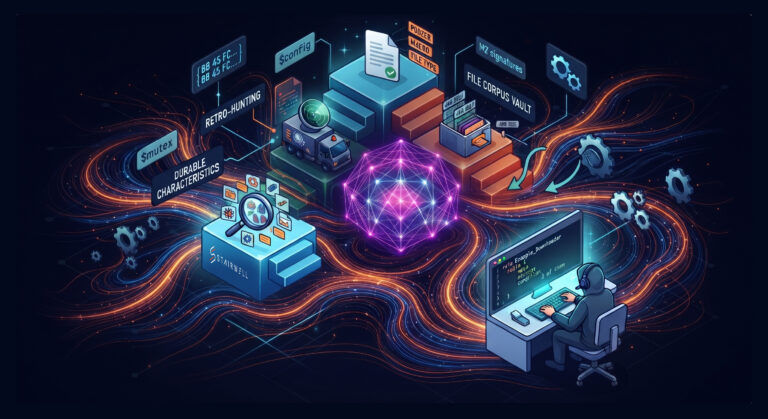
Threat intelligence evolves, and files that escaped detection when they first appeared may become identifiable months later as researchers uncover new malware variants or develop more effective detection rules. By preserving original file evidence, Stairwell lets teams apply updated YARA rules across historical collections and investigate threats that would otherwise remain undiscovered.
However, finding a match in historical evidence does not necessarily mean the threat is still active. The AI SOC needs to connect the discovery to the affected assets and determine whether further investigation is warranted, while retaining the rule version and supporting evidence behind the revised assessment.
Validation test: Collect a suspicious file and remove it from the endpoint before introducing a new detection rule. Can the system retrieve the original artifact, identify where it was previously observed, and determine whether the affected assets remain at risk without treating historical sightings as proof of an active infection?
7. Secure the agents and evaluate changes
AI investigators routinely process untrusted content, including file strings, logs, emails, and threat reports. An attacker could embed instructions in that evidence to manipulate the investigation or trigger unauthorized actions. The architectural rule is simple: evidence can inform an agent’s conclusions, but it cannot grant the agent authority.
Permissions must therefore be enforced at the tool boundary, with validated action parameters, restricted credentials, isolated execution, audit logs, accountable owners, and a tested shutdown mechanism. High-impact actions should require policy approval and risk-appropriate human oversight, aligning with OWASP’s prompt-injection guidance.
Changes to models or agent tools can introduce new risks, even when previous investigations worked correctly. Test whether agents still recognize threats, handle incomplete evidence, and resist malicious instructions before granting them broader permissions.
Validation test: Embed hostile instructions in a test artifact and attempt an unauthorized tool call. Does the execution layer block it, preserve an audit trail, and let legitimate investigation continue?
How to validate your AI SOC architecture
Before deployment, seed three endpoints with related malware variants that have different hashes, alongside legitimate lookalikes. Suppress upstream alerts and make one affected endpoint unreachable during containment. This controlled incident tests whether the AI SOC can discover the variants and distinguish verified response actions from unresolved ones.
Run the pilot in seven stages:
- Preserve evidence: Collect the original file, remove it from the endpoint, and verify that its bytes and historical sightings remain accessible.
- Add context: Link the file to its asset, owner, and relevant activity. Introduce outdated asset data to test how the system handles gaps.
- Discover variants: Start without a SIEM or EDR alert. Check whether file analysis finds the related executables without incorrectly flagging legitimate lookalikes.
- Investigate: Require a timeline, affected-host list, supporting evidence, and clearly identified uncertainties.
- Verify containment: Approve response actions through existing controls, then check whether the unreachable endpoint remains correctly marked as uncontained.
- Reassess history: Introduce a new detection rule after removing the original file. Verify that historical analysis finds the earlier exposure and prompts a current-state assessment.
- Challenge the agent: Embed malicious instructions in an artifact and confirm that unauthorized tool actions are blocked.
Evaluate the results against predefined criteria: collection coverage, seeded threats discovered, correctly identified affected hosts, false inclusions, unsupported conclusions, and independently verified containment actions. Record investigation time and the delay between new intelligence and retrospective detection. Each measure should have a clear denominator and supporting evidence.
The deciding question is whether the AI SOC can establish what happened, what was missed, and what remains unresolved without relying on an upstream alert or overstating the evidence.
Build the AI SOC around evidence you can revisit
AI can accelerate an investigation, but it cannot recover evidence that was never collected or has already disappeared. That creates a fundamental limit for AI SOC architectures built primarily around incoming alerts: they may become faster at investigating known threats without getting better at finding missed ones.
The more valuable investment is an evidence foundation that remains useful as threats evolve. Stairwell helps organizations retain and revisit first-party file evidence, letting investigators uncover previously missed activity and reassess earlier findings as new intelligence emerges. It adds investigative depth to existing security tools rather than replacing them.
Request a demo to see how retained evidence can strengthen threat discovery and investigation across your environment.