Take a Virtual Tour
 Book a Demo


Abstract
- Proactive threat hunting systematically searches for malicious or suspicious activity that existing security controls have not surfaced, using testable hypotheses and available evidence.
- Effective hunts define their scope, required evidence, baseline, and exit criteria before investigation begins.
- Hunters expand beyond exact indicators by tracing relationships across files, hosts, identities, infrastructure, and related malware variants.
- Retained historical evidence enables retro-hunting as new IOCs, YARA rules, malware knowledge, and threat intelligence emerge.
- Mature programs turn hunt outcomes into stronger detections, improved telemetry, closed coverage gaps, and measurable security improvements.
Finding one malicious file rarely defines the full scope of a malware campaign. You identify one malicious file, block the hash, and another variant appears with a different name or packaging. Finding one artifact gives you a lead, but it does not tell you how many related variants exist or where else they are running.
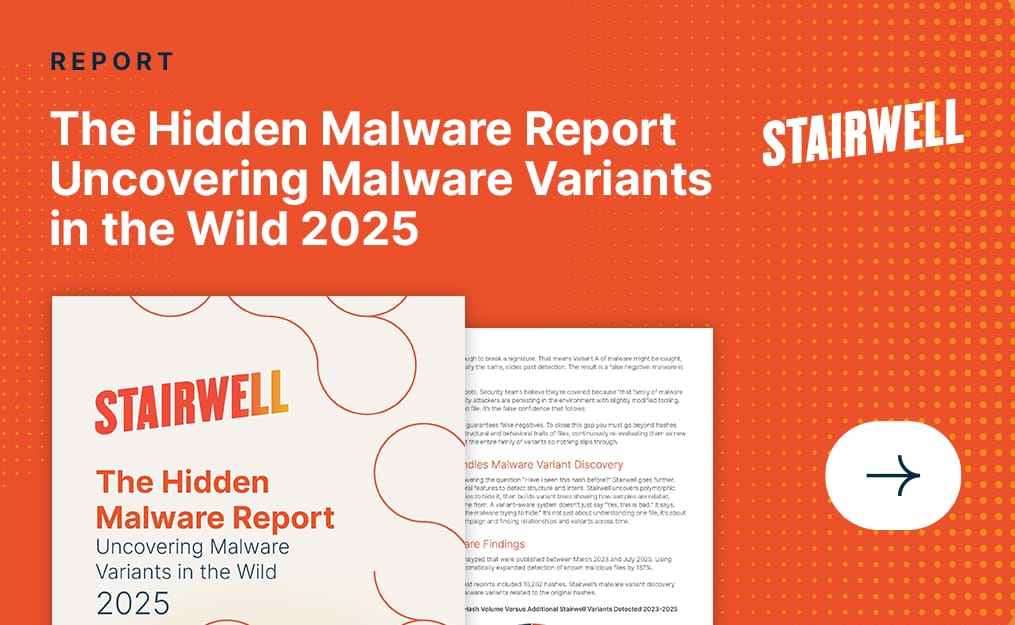
In Stairwell’s 2026 Hidden Malware Report, researchers started with 19,418 known malware hashes and uncovered more than 46,000 additional variants that the original research did not identify – an average of 2.4 for every published hash. Finding one malicious file is only the start. Known indicators can reveal only part of a malware family, which is why threat hunters need to follow the evidence beyond the first detection.
What is proactive threat hunting?
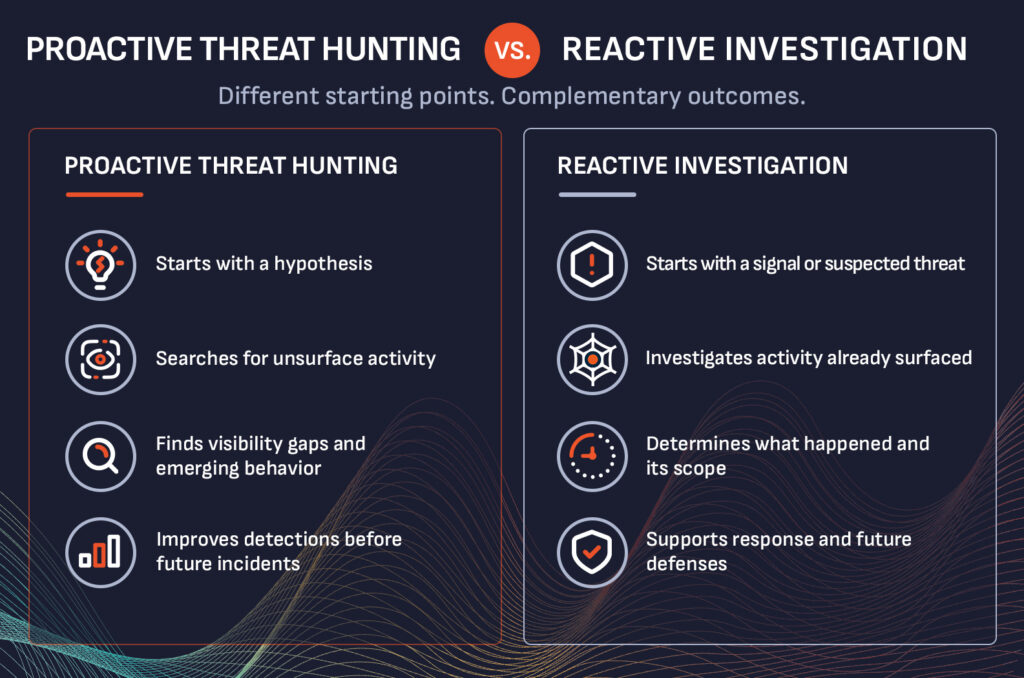
Proactive threat hunting is a structured process for searching an environment for malicious or suspicious activity that existing controls have not surfaced for investigation.
A useful hunt starts with a reason to investigate, a defined scope, sufficient evidence, and an explicit outcome. It differs from random exploration and from incident response, where a confirmed or suspected security event has already triggered an investigation.
The core assumption behind proactive threat hunting is that the absence of alerts does not necessarily mean the absence of malicious activity. Detection controls have coverage limits and tuning trade-offs. Threat intelligence reflects what defenders know at a particular point in time. Attackers can also rename, recompile, or repackage malware so that existing indicators no longer match.
Useful hunting targets can include:
- Living-off-the-land activity that resembles legitimate administration
- Credential use that falls outside expected patterns
- Low-prevalence executables appearing on sensitive systems
- Renamed, recompiled, or otherwise changed variants of known malware
- Suspicious persistence mechanisms
- Relationships between hosts, files, accounts, and infrastructure that do not cross an alert threshold on their own
The purpose is to repeatedly test a specific security question against the evidence available in your environment.
How to build a proactive threat hunting process
A productive hunt starts with a testable question. Teams can derive hypotheses from current threat intelligence, MITRE ATT&CK TTPs, recent incidents, red- and purple-team findings, known detection gaps, unusual observations in their own environment, or risks associated with high-value assets. They can use a simple structure like:
If [adversary behavior] is occurring in [scope], we expect to find [observable evidence] in [data/evidence source] during [time window].
Compare a broad instruction such as “look for PowerShell abuse” with a hypothesis such as:
If an attacker is using PowerShell to establish persistence on finance workstations, we expect to find PowerShell processes launched from unusual parent processes, followed by changes to persistence-related registry locations, during the past 30 days.
The focused version gives the hunter a defined scope and identifies the evidence that could support the hypothesis. A clear time boundary also keeps the hunt from expanding indefinitely.
Before running the hunt, establish a baseline for expected activity and define exit criteria. Decide what evidence would strengthen or weaken the hypothesis. An absence of suspicious findings means little if the team later discovers it never collected the evidence needed to identify the activity.
ATT&CK can provide a common vocabulary for adversary behavior and help structure a hypothesis, but ATT&CK coverage should not become a checkbox exercise. Your environment still determines whether you have the evidence required to investigate a particular technique.
Teams also need to prioritize hunts based on the potential impact of the activity. A hypothesis involving critical infrastructure or other high-value assets may warrant attention even when the available evidence is limited. Threat relevance and known coverage gaps should also inform which hunts move to the front of the queue.
What data do you need for proactive threat hunting?
Evidence requirements should follow the hypothesis. No single source provides enough context for every hunt, and sophisticated queries cannot compensate for evidence that was never collected or retained. A proactive threat-hunting program may draw on:
- Endpoint and process telemetry: Process execution, parent-child relationships, command lines, services, registry changes, persistence mechanisms, and host activity.
- Identity and authentication data: Logins, failed authentication attempts, privilege escalation, account changes, token use, and unusual access patterns.
- Network and DNS telemetry: Connections, DNS queries, traffic flows, beaconing, suspicious domains and IP addresses, and lateral movement.
- Cloud telemetry: Control-plane activity, API calls, identity events, configuration changes, workload activity, and access to cloud resources.
- File and executable evidence: Executables, libraries, scripts, hashes, signatures, prevalence, structural similarity, and related file variants.
- Threat intelligence: IOCs, YARA rules, known malware families, adversary infrastructure, TTPs, and newly discovered campaign indicators.
- Historical evidence: Retained telemetry and artifacts that allow hunters to search backward when new IOCs, detections, malware knowledge, or threat intelligence emerge.
Coverage matters as much as collection. Before concluding, establish which assets contribute to each source, how long you retain the evidence, whether collection remained continuous throughout the hunt window, and whether the required fields exist.
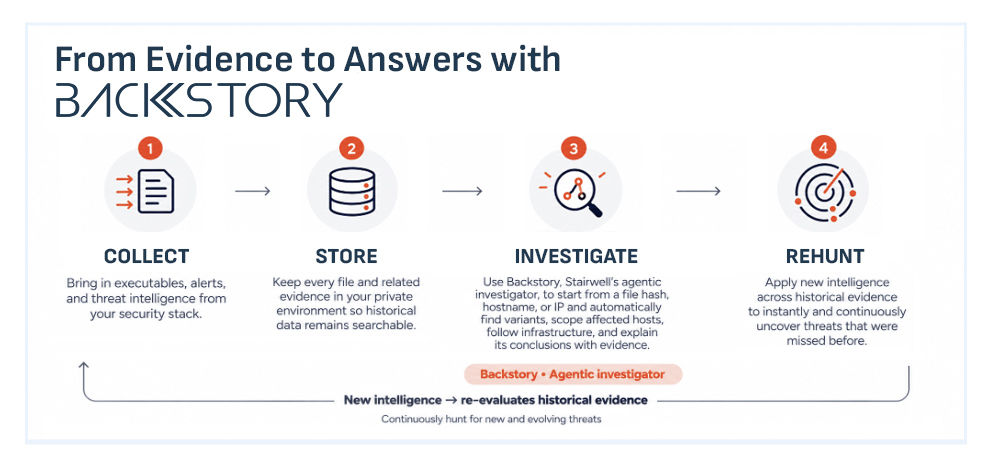
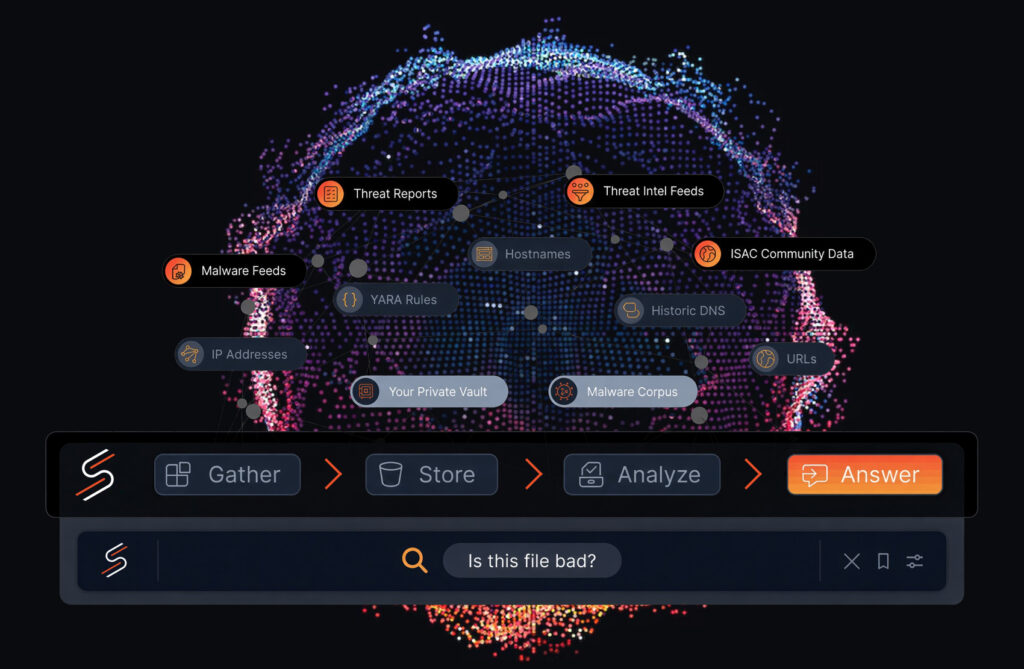
An evidence-first approach can strengthen telemetry-driven hunting. Stairwell is foundational to the AI SOC, built on ground truth. In practice, that ground truth comes from retained first-party executable file evidence from the customer environment.
The platform preserves executable files, libraries, and scripts in a private environment and analyzes them using prevalence, similarity, historical context, signatures, and threat intelligence. Because that evidence persists, teams can revisit it as intelligence changes. The retained evidence adds another layer alongside SIEM, EDR, MDR, SOAR, and other existing systems, without requiring teams to replace their security stack.
How to investigate and scope threats during a hunt
1. Pivot from the indicator to everything connected to it
Treat the first finding as a starting point. If a hunt uncovers a malicious file on one endpoint, search for the same or related files on other hosts. Check which users interacted with affected systems, what infrastructure the file contacted, and whether similar activity appears elsewhere in the environment. Each pivot should answer a scoping question so you can build a defensible picture of the blast radius.
2. Look for variants that exact-match searches will miss
Exact indicators have a shortcoming: malware can change without becoming unrelated. A different hash, filename, or package can prevent an exact-match search from finding another member of the same malware family.
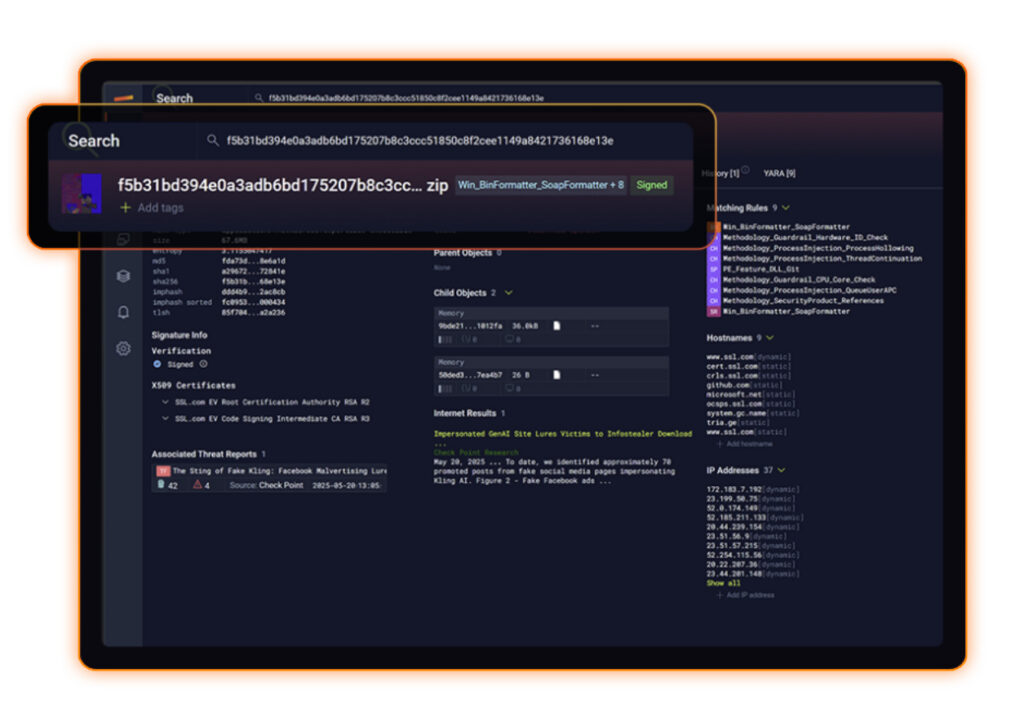
Expand the hunt using structural similarity and prevalence. If one malicious executable is rare in your environment, for example, examine structurally similar files and where they have appeared. This can reveal related artifacts that a search for the original hash would never return. Stairwell’s Variant Discovery supports this type of pivot by identifying related variants across renamed, recompiled, or otherwise changed files.
3. Scope the campaign across files, hosts, and infrastructure
Once you find related activity, determine whether those findings belong to the same campaign. Remediation based on the first finding can leave related activity untouched. Removing one malicious file from one host is not enough if another variant exists on five other systems or if the same infrastructure connects several findings.
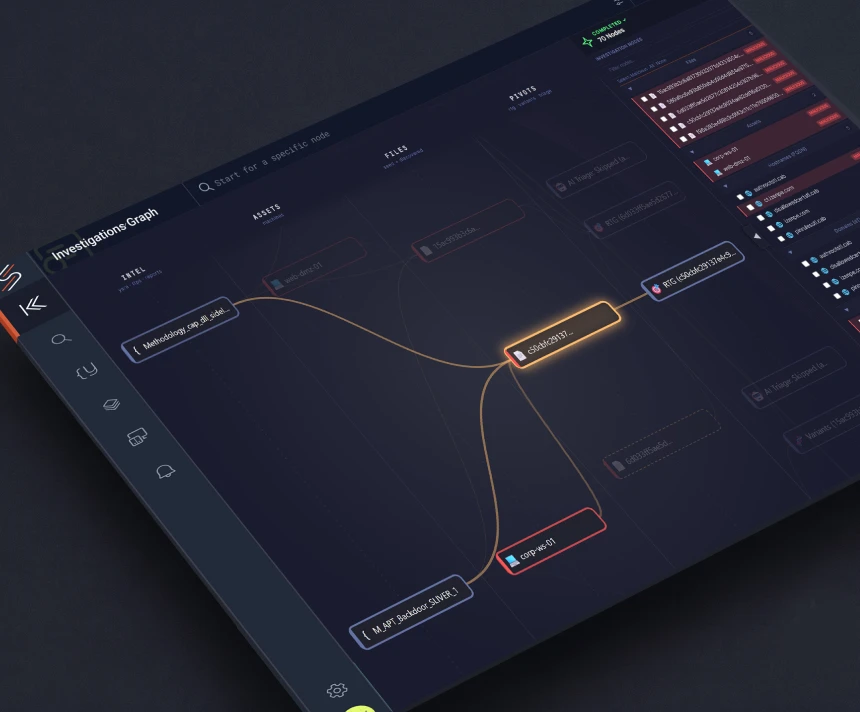
Stairwell’s Backstory can start with a seed such as an alert, hash, hostname, IP, IOC, or suspicious artifact, and then expand the investigation into related variants, affected hosts, infrastructure, and campaign context, producing findings and recommended response actions.
4. Build a timeline that explains what happened
Establish the first and last sightings of relevant activity, then map affected systems, persistence, lateral movement, infrastructure relationships, and remediation events against that window. Pay particular attention to evidence that pushes the timeline backward. The first detection marks when the team found the threat, not necessarily when the threat entered the environment.
An earlier sighting should change the hunt. Extend the search window and check whether other affected systems or related artifacts also appear earlier than expected. Keep moving the boundary until the available evidence no longer pushes the campaign further back. The resulting timeline gives responders a stronger basis for determining the campaign’s duration and whether the current remediation scope is sufficient.
5. Search backward once you know what to look for
Use new findings against historical evidence. If the investigation uncovers another variant or detection pattern, search retained evidence for earlier occurrences. This retro-hunt can reveal whether the threat entered the environment before the original detection and whether related activity was present before defenders knew how to identify it.
Historical search matters because threat knowledge changes. Stairwell retains first-party file evidence so new IOCs, YARA rules, malware knowledge, and other intelligence can be applied to files observed in the past. A file that lacked enough context to warrant action when it first appeared can become relevant when new intelligence connects it to a known threat.
6. Preserve the evidence needed to close the investigation
Document more than the final verdict. Record the evidence supporting each finding, the assets included in the investigation, the relationships used to establish scope, and any remediation that remains outstanding.
The documented evidence gives incident responders a concrete basis for action and makes the eventual closure decision easier to defend. If the team concludes that the threat has been contained, it should be able to show which files and systems were affected, how the campaign was scoped, what remediation occurred, and what evidence supports the conclusion.
How to measure and improve your threat hunting program
Start by recording each outcome in one of four categories:
- Confirmed malicious activity
- Benign or expected behavior
- A detection or telemetry gap
- An inconclusive result caused by insufficient evidence
The latter two deserve particular attention because they show where the organization lacks the visibility required to answer its own security questions. Then, convert validated findings into durable improvements that can inform Continuous Threat Exposure Management (CTEM) efforts. Operational metrics can show whether the hunting program itself is improving. Useful measures include:
- Evidence and asset coverage
- Time to establish scope
- Detection gaps closed
- New detections created
- Recurrence after remediation
- The percentage of hunts that end with a documented outcome
Teams should also build retro-hunting into the operating model. Threat knowledge changes, so a file that appeared unknown or benign six months ago may become significant after researchers publish a new YARA rule, for example.
Continuous hindsight extends threat hunting into the past. Teams can reassess retained evidence as their understanding of a threat evolves, giving earlier activity new context without restarting the investigation.
Make proactive threat hunting a continuous practice
Proactive threat hunting works best as a continuous cycle. Each hunt should leave the team better prepared for the next one, whether that means improving a detection or closing an evidence gap. Historical evidence also deserves another look as threat knowledge changes. The aim is to keep learning from what is already in the environment and use those findings to strengthen future investigations.
Stairwell supports that approach with retained first-party file evidence that teams can investigate today and revisit later. By adding a private evidence layer alongside the existing security stack, teams can look beyond the activity that generated alerts and build an evidence-backed picture of what happened and how far it spread.
See how Stairwell supports proactive threat hunting with retained file evidence, variant discovery, and historical re-evaluation. Book a demo.